
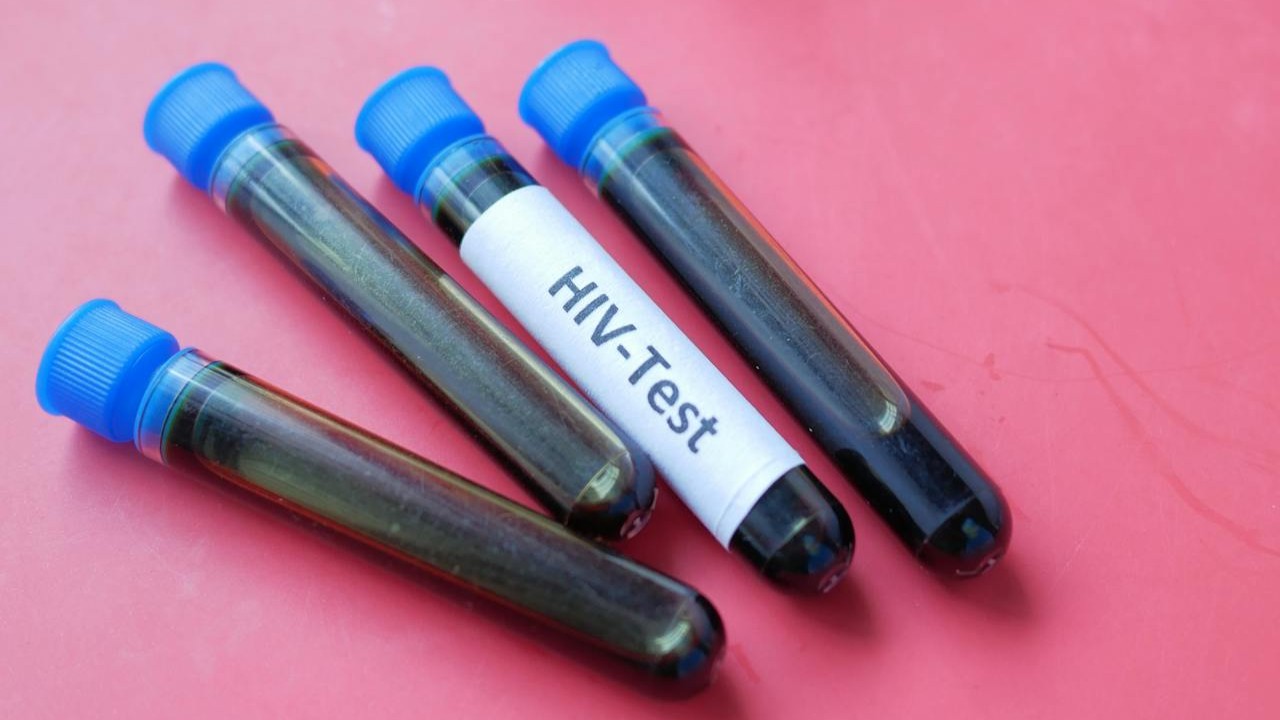
What an HIV self-test is actually for
An HIV self-test for home use is not a tiny lab test in your pocket. It is an antibody screening test for a first assessment. That is exactly why it is useful for people who want to test privately, without an appointment, and without waiting days for an answer.
It is not designed to catch every new infection right away. The Paul-Ehrlich-Institut describes HIV self-tests as screening tests and states clearly that any reactive result has to be confirmed with follow-up testing. PEI: HIV self-tests
Quick overview: the key answers first
- HIV self-tests work well when you use a quality-assured test kit correctly and do not test too early.
- For HIV self-tests, PEI uses a 12-week window after a possible risk before a negative result is considered meaningful.
- For fourth-generation lab screening, RKI uses a 6-week diagnostic window after possible exposure.
- A negative self-test tells you something about your own HIV status, not your partner's status and not other STI.
- After a recent risk event, a home test does not replace fast medical assessment. If HIV is a real concern, PEP matters only within 72 hours.
What is the difference between a self-test, a rapid test, and a lab test?
HIV self-test at home
You perform the test yourself and read the result yourself. In Germany, this mainly refers to over-the-counter CE-marked HIV self-tests that detect antibodies from a drop of blood, according to PEI. PEI: available HIV self-tests
Professional rapid test
A point-of-care rapid test also avoids a long wait, but trained staff guide the process. The advantage is not just the test itself. Errors in sampling, storage, and interpretation are less likely when a clinician or counselor is involved.
Fourth-generation lab test
A fourth-generation lab screening test combines antibody testing with p24 antigen detection. That is why it can detect HIV earlier than a pure antibody self-test. After a recent exposure, this is often the stronger option.
Nucleic acid testing for very early clarification
If the possible exposure was very recent, a nucleic acid test, usually shortened to NAT, can make sense in a medical setting. The CDC describes a possible detection window of about 10 to 33 days. CDC: HIV testing overview
How well do HIV self-tests really work?
The short answer is: well, but not perfectly. High-quality self-tests have shown very high specificity in studies, so false-positive results are uncommon. The weaker point is sensitivity in difficult situations, especially during a very early infection or when the test is not used correctly.
A large study from Zambia found that a user-run OraQuick self-test reached a sensitivity of 87.5 percent and a specificity of 99.7 percent compared with a laboratory reference standard. Compared with the local rapid-testing pathway, sensitivity was also higher. The authors emphasized that even a short demonstration improved usability. PubMed: BMC Infectious Diseases 2022
A study from Malawi also showed high accuracy under real-world conditions, but it found differences between test types: blood-based self-tests were more sensitive, while oral self-tests were easier to use. Blood-based tests, however, produced more invalid results. PubMed: BMC Infectious Diseases 2024
In real life, that does not mean you need to memorize percentages. It means a negative self-test is never a magic pass. It only has value under the right conditions.
The crucial issue is the window period
The window period is the phase after a possible HIV exposure when a test can still come back negative even though an infection is already present. This is where most misunderstandings start.
For HIV self-tests, PEI states clearly that 12 weeks should have passed since the last possible risk before the result is considered meaningful. PEI: 12-week window for HIV self-tests
RKI places fourth-generation lab screening earlier and uses 6 weeks after possible exposure as the point when a negative screening result becomes meaningful. RKI: diagnostic window for lab testing
If you want the earliest reliable answer, a home test is usually not the strongest tool. The right test type at the right time matters more.
When is a negative result reliable and when is it not?
A negative result is genuinely helpful when three things line up: the right test, enough time since the last possible risk, and no new exposure since then.
- A negative self-test is most reliable when at least 12 weeks have passed since the last possible HIV risk.
- A negative fourth-generation lab test is usually meaningful earlier if the RKI timing window has been met.
- A negative home test is not reliable enough shortly after a risk event, after a newer exposure, or when PEP or PrEP decisions are part of the situation.
The CDC also points out that a negative HIV test does not prove that your partner does not have HIV. CDC: what a negative HIV test means
Can you have sex after a negative HIV rapid test?
The practical answer is simple: a negative HIV self-test is not a blanket clearance for sex without protection. Whether sex is lower risk after testing depends on timing, what happened since the test, and the prevention strategy both people are using.
If the window period has not clearly passed, you should not treat a negative result like an all-clear. In the early phase, HIV may still be below the detection threshold.
If the full window period has passed and there has been no new exposure, a negative result speaks strongly against you having HIV yourself. It still says nothing about your partner's HIV status or about other infections such as chlamydia or syphilis.
For many people, the better question is not yes or no, but what prevention plan makes sense. That can include condoms, a realistic testing schedule, honest communication, and depending on the situation, pre-exposure prophylaxis called PrEP.
What to do after a recent risk event
If a condom broke, blood exposure played a role, or you suspect another relevant HIV exposure, an immediate home test usually does not give you the answer you need. The first step is medical assessment, not home diagnostics.
Timing matters for HIV post-exposure prophylaxis. The CDC recommends starting PEP as soon as possible and no later than 72 hours after a possible exposure. CDC: start PEP within 72 hours
If you are dealing with that situation right now, the next useful read is also Broken condom. In that moment, a home test is at most a later step, not the first emergency decision.
When a self-test is the wrong choice
An HIV self-test is not right for every scenario. PEI states clearly that HIV self-tests are not for treatment monitoring in people with known HIV infection and are not intended for people using PrEP or PEP. PEI: limits of HIV self-tests
- Very recent exposure when you want immediate clarity
- PEP or PrEP is part of the situation
- Known HIV infection under treatment
- Unclear or repeatedly invalid home test results
- Symptoms that could fit an acute HIV infection after a risk contact
In these situations, medically guided testing is the better decision.
Typical mistakes that weaken the result
Not every weak result points to a bad test strip. Often the problem is the testing process itself.
- Testing too early during the window period
- Reading the result at the wrong time
- Unclean sample collection
- Improper storage or an expired test kit
- Buying from questionable sources instead of quality-assured products
If a result is invalid, repeat the test with a new kit and follow the instructions exactly. If it stays unclear, get tested by a professional.
Myths and facts about HIV self-testing
HIV testing often triggers two extremes. Some people expect total certainty after 15 minutes, while others distrust every result. Neither reaction helps. What helps is a calmer middle ground: a solid test, the right timing, and an honest interpretation.
- Myth: A negative self-test means everything is safe right away. Fact: A negative result is only as strong as the timing. Before the window period ends, it may simply be too early.
- Myth: HIV self-tests are useless. Fact: They are genuinely useful when you use them correctly and respect the 12-week rule. They are not toys, but they are also not perfect substitutes for every diagnostic pathway.
- Myth: A positive self-test means you definitely have HIV. Fact: A reactive self-test always has to be confirmed. That is why a second diagnostic step exists.
- Myth: If I am scared enough, I should just take several tests on the same day. Fact: Multiple tests at the wrong time do not solve the real problem. Reliability comes from timing, not panic repetition.
- Myth: Testing at home is only for careless people. Fact: For many people, a private home test is the first realistic way to start testing at all. That can be a very responsible step.
- Myth: If the result is negative, I do not need to talk to anyone else. Fact: After a recent risk event, counseling can matter more than the home test itself, especially if PEP is still possible.
- Myth: One HIV test answers every question about sex and safety. Fact: An HIV test says nothing about other STI, later risks, or your partner's status.
- Myth: People with HIV cannot have a normal sex life. Fact: With effective treatment and durable viral suppression, sexual transmission can be prevented. Fear is understandable, but medically that is not where the story ends.
What happens after a positive or reactive result?
A reactive self-test does not automatically mean the HIV diagnosis is final. It means you should not delay proper follow-up any longer.
PEI states clearly that a positive result always has to be checked by a doctor or a counseling service. PEI: confirm a positive result
The reverse point matters too: when HIV is treated effectively and viral load stays durably suppressed, sexual transmission does not occur. HIV.gov describes this as U equals U. HIV.gov: viral suppression and U=U
That statement is based on medically monitored lab results, not on home tests. Until your status is clarified, do not speculate. Get confirmation and think through prevention.
A practical testing strategy instead of blind reassurance
The best HIV test is not always the fastest one. It is the one that actually fits your situation.
- For a private routine check or a later-stage review, an HIV self-test can make good sense.
- For a recent exposure, a lab test is usually the better option.
- For recurring risk, a fixed testing plan works better than one-off panic testing.
- For prevention decisions, HIV is never the only issue. Other STI and your partner's prevention strategy still matter.
If you want a broader sense of when STI testing makes sense, this article also helps: Do I have a sexually transmitted infection?.
Read next



Conclusion
HIV self-tests work well when you do not treat them like magic. They are strong for private screening, weaker after a very recent exposure, and not a blanket safety clearance for sex. What really matters is the window period, correct use, confirmation of reactive results, and an honest prevention strategy that also includes partner status, PrEP, PEP, and other STI.