
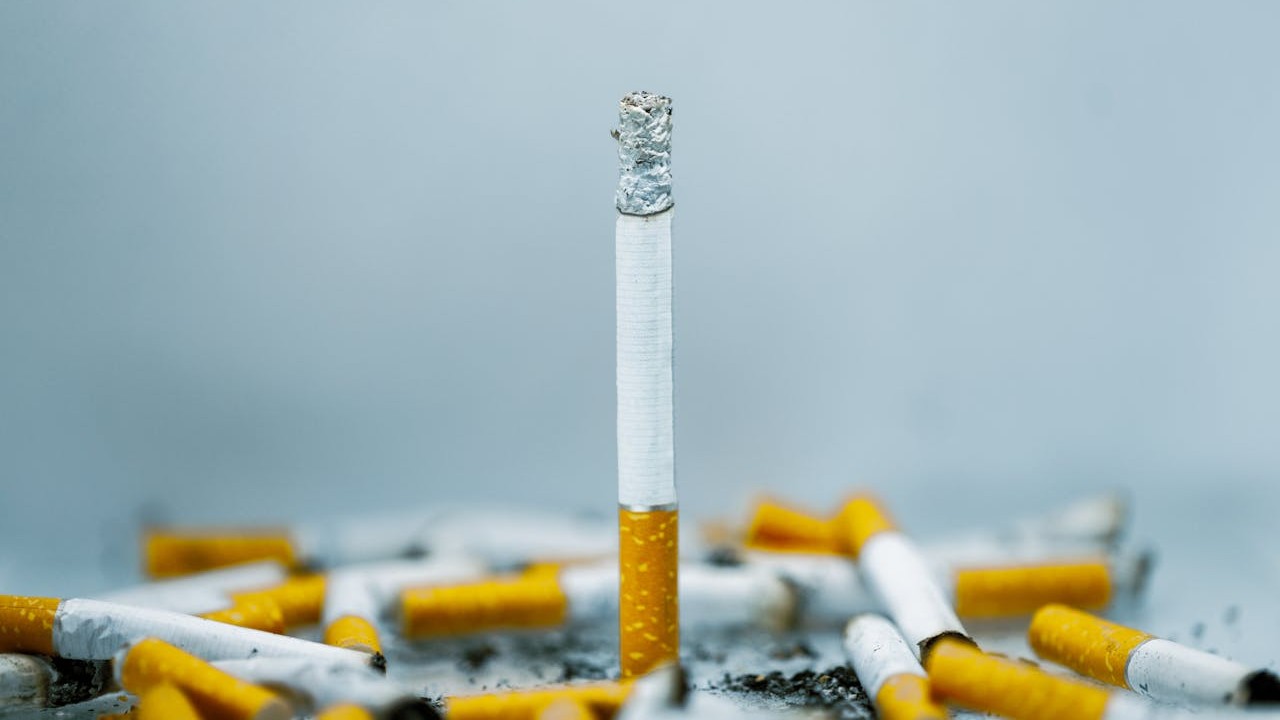
What matters most
- The safest pregnancy is smoke-free, nicotine-free, and protected from secondhand smoke.
- Smoking increases the risk of preterm birth and low birth weight, among other outcomes.
- Secondhand smoke is not a side issue. It is a real burden for pregnancy and the baby.
- E-cigarettes, hookah, and nicotine pouches are not safe workarounds during pregnancy.
- Quitting helps at any point, even if you were not able to stop right away.
Why smoking is a problem during pregnancy
Smoking is not only about nicotine. Cigarette smoke also contains carbon monoxide and many combustion by-products. Carbon monoxide reduces how much oxygen the blood can carry. During pregnancy that matters because the baby depends on a steady oxygen supply.
Nicotine also affects blood vessels and circulation. Together, this fits with what guidelines and public health agencies have summarized for years: smoking during pregnancy is linked to worse pregnancy and newborn outcomes.
A clear official overview is available from the CDC on smoking, pregnancy, and infant health.
Which risks are especially well established
The strongest evidence links smoking during pregnancy with low birth weight and preterm birth. There are also signals for growth problems and placental dysfunction. It helps to keep the wording precise: risk does not mean harm is certain. It means the odds go up, and reducing the burden is medically meaningful.
After birth, smoke exposure still matters. Babies exposed to secondhand smoke are at higher risk for sudden infant death syndrome, respiratory illness, ear infections, and poorer lung function.
Secondhand smoke has to count too
If you do not smoke yourself but are regularly exposed to smoke at home, in the car, or in close surroundings, that is not harmless. The CDC explicitly states that secondhand smoke during pregnancy can cause small but real reductions in birth weight and may also contribute to preterm delivery.
After birth, the direction is even clearer. A smoke-free home and smoke-free car directly protect the baby. For a practical German-language overview, see Kindergesundheit-Info on secondhand smoke.
E-cigarettes, vapes, hookah, and nicotine pouches
E-cigarettes and vaping
E-cigarettes do not burn tobacco, but they are still not a safe pregnancy option. Many products contain nicotine, and nicotine is not considered safe for the fetus. The CDC states clearly that nicotine is toxic to developing fetuses.
In practical terms, switching from cigarettes to vaping may reduce some combustion-related toxins, but it does not solve the nicotine problem and often does not end dependence. The goal is still smoke-free and ideally nicotine-free.
Hookah
Hookah is not a lighter alternative. It also produces harmful substances, and long sessions can mean substantial exposure. During pregnancy, it is not a safe substitute.
Nicotine pouches and other smokeless products
Smokeless nicotine products avoid smoke, but they do not avoid nicotine. In pregnancy that is not a green light. If these products come up at all, they should be seen only as part of a physician-guided harm reduction discussion, not as a long-term solution.
Smoking matters even before pregnancy
This is not only a positive-test issue. If you are trying to conceive, becoming smoke-free earlier is already helpful. That also applies to partners, because a smoking environment makes quitting harder and often means secondhand smoke is already part of very early pregnancy before someone even knows they are pregnant.
If you also want to understand cannabis in this context, Cannabis in Pregnancy and Breastfeeding is a useful next article.
If you smoked before you knew you were pregnant
This worry is very common. Many people do not realize they are pregnant for the first few weeks. The important step is not to get stuck in guilt about the past, but to reduce the burden as clearly as possible from now on.
For medical care, honesty in prenatal visits helps more than hiding it. That makes it easier to talk realistically about secondhand smoke, relapse risk, and the kind of support you need.
Quitting during pregnancy: what helps in real life
The best time is now
The earlier you stop, the better. But a later quit attempt is not pointless. Every smoke-free week lowers the burden. That is why the real question is not whether it still helps, but what your next workable step looks like.
What often works better than willpower alone
- Set a clear quit date within the next few days.
- Write down common triggers, such as coffee, driving, arguments, or phone breaks.
- Choose one fixed replacement action for each trigger.
- Remove cigarettes, lighters, and ashtrays from daily life.
- Bring support in early instead of waiting for repeated lapses.
Use official support
If you want a straightforward official starting point, rauchfrei-info on smoking and pregnancy is useful, even if it is in German. The core principle is the same: support works better than shame.
Smoking less is better than smoking more, but zero is still the goal
Many people first ask whether cutting down is enough. The honest answer is that every cigarette not smoked helps, but a few cigarettes a day are not the same as being smoke-free. The burden remains, only at a lower level.
That is why cutting down makes the most sense as a step toward quitting, not as the final plan. If you feel stuck at a lower number, that usually means you need more support, not that you failed.
If the people around you keep smoking
Many people do not struggle because they do not know the risks. They struggle because of the environment. If a partner, family member, or close circle keeps smoking, relapse risk rises. That is why smoke-free rules at home and in the car are not just nice extras. They are part of the protection plan.
A clear minimum rule often helps: no smoking in the home, no smoking in the car, and no smoking around you. Anything less keeps the problem alive.
Nicotine replacement and medications: not without medical guidance
During pregnancy, the general logic in clinical guidance is cautious. Counseling and behavior-based support come first. Nicotine replacement and medications are not standard self-treatment at home. They need to be weighed against the risks of continuing to smoke.
The German S3 guideline on tobacco dependence reflects this cautious approach explicitly: AWMF S3 guideline on smoking and tobacco dependence.
Practically, that means if quitting completely does not work without additional help, a medical discussion is safer than trying different nicotine products on your own.
After birth, smoke protection still matters
The issue does not end with delivery. Relapse in the postpartum phase is common, especially when lack of sleep, stress, and a smoking environment all come together. At the same time, secondhand smoke still matters for the baby, including because of respiratory illness and sudden infant death syndrome.
If you are also thinking about feeding and everyday life after birth, Breastfeed or Not Breastfeed is a useful follow-up article.
Myths and facts
- Myth: A few cigarettes a day are basically harmless. Fact: Any reduction is better than more, but medically zero is still the goal.
- Myth: Secondhand smoke is only a minor issue. Fact: Secondhand smoke is explicitly treated as a health risk during pregnancy and infancy.
- Myth: Vapes are safe during pregnancy because nothing is burned. Fact: Many products contain nicotine and are not considered safe alternatives.
- Myth: If smoking already happened, quitting no longer helps. Fact: Quitting still matters at any stage because future exposure goes down.
- Myth: A lapse means failure. Fact: Lapses are common and usually show where triggers and support need to be adjusted.
When to actively get help
Do not wait until everything feels out of control. Support is especially important if you smoke every day, need a cigarette soon after waking up, feel very unsettled without nicotine, or are living in a persistently smoking environment.
If you are also worried about early delivery or other pregnancy complications, Preterm Birth can help put warning signs and risk patterns into context.
Keep Reading



Conclusion
Smoking during pregnancy is not a morality issue. It is an exposure issue with well-established risks. The safest option is smoke-free, nicotine-free, and protected from secondhand smoke. If quitting is hard, support is worth getting early and without shame.