
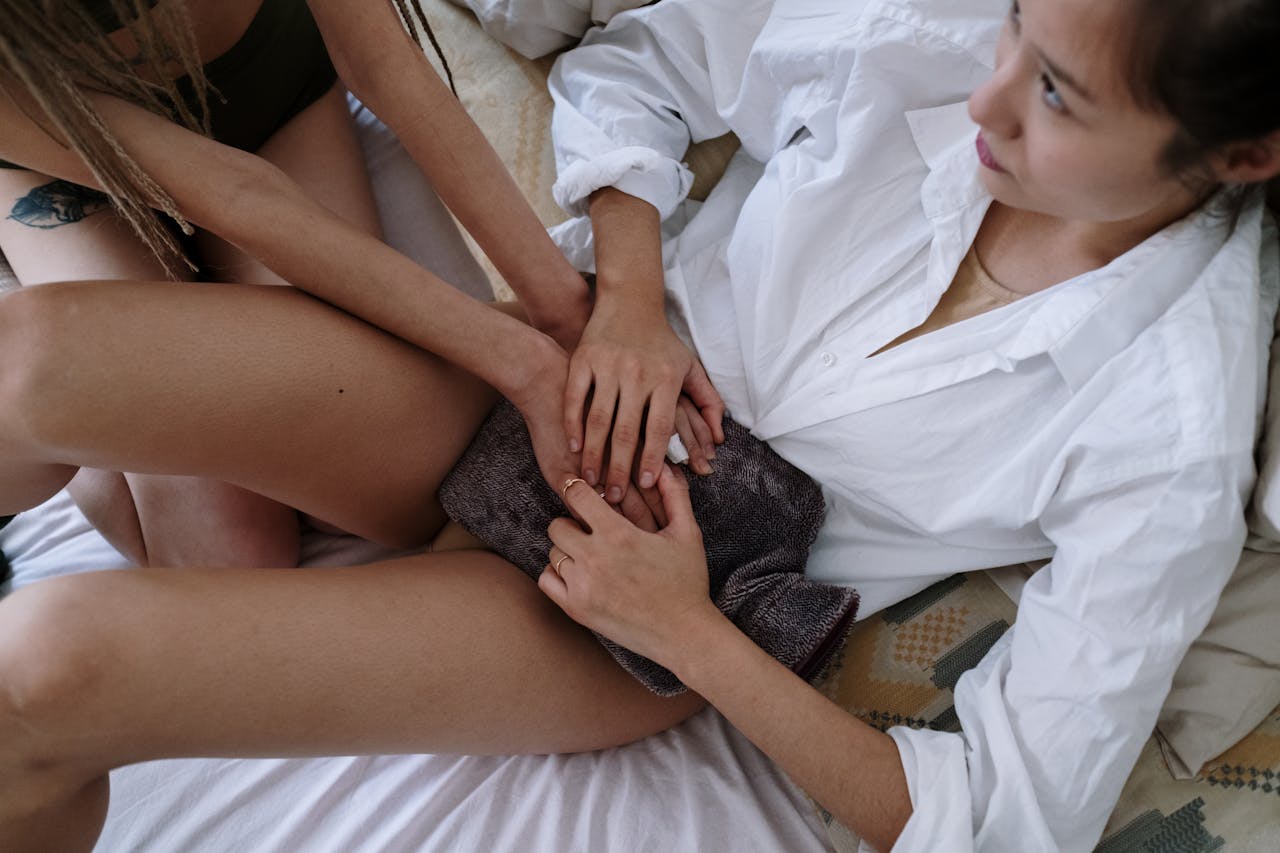
What is meant by birth injuries
Birth injuries are injuries to skin, mucous tissue, or deeper tissue that can happen during a vaginal birth. The perineum, labia, vaginal wall, and more rarely deeper structures around the anal sphincter can be affected.
What matters is not only that an injury happened, but how deep it is, whether it was stitched, how strong the pain and swelling are, and whether symptoms are improving overall. That kind of framing is more helpful postpartum than vague reassurance or unnecessary dramatizing. If you mainly want to understand how the whole body changes in this phase, the overview on postpartum recovery also helps.
Why birth injuries are so common
During birth, tissue has to stretch a lot in a short time. Pressure, friction, a very fast delivery, and in some situations instruments such as vacuum assistance or forceps can add to that. That is why both minor and more significant injuries around the birth canal are common.
Common does not automatically mean trivial. Superficial abrasions often heal without major problems, while deeper tears or more pronounced hematomas may need closer follow-up. A clear patient-friendly overview of typical birth injuries is available from Familienplanung. Familienplanung: Injuries caused by childbirth
Which birth injuries can occur
More than one injury can happen at the same time. The terms sound similar, but they describe different areas and often different follow-up needs.
Abrasions and small tears
Superficial injuries to the mucosa or skin often burn during urination and react strongly to friction. They can feel very uncomfortable even when they look medically minor.
Perineal tear
A perineal tear affects the tissue between the vaginal opening and the anus. Mild tears involve skin and superficial layers. Deeper tears can involve muscle. In severe perineal tears, structures around the sphincter are affected, which is why diagnosis, repair, and follow-up matter so much. If you want to focus just on this injury pattern, there is a separate article on perineal tears after birth.
Episiotomy
An episiotomy is a deliberate incision that may be used in certain birth situations. In day-to-day healing, it often matters less whether tissue tore or was cut than how strong swelling, tension, and wound pain are. The NHS explains care and warning signs after episiotomy or tearing very clearly. NHS: Episiotomy and perineal tears
Hematoma
A hematoma is bleeding into the tissue. Typical signs include a tense pressure pain, increasing swelling, and the feeling that sitting suddenly hurts much more. Not every hematoma is large, but when symptoms clearly worsen it should be checked quickly.
Tears of the labia, vaginal wall, or cervix
Labial and vaginal tears often burn intensely because the area is very sensitive. Cervical tears are less common, but can matter when bleeding is more significant. These injuries are usually examined after birth and treated if needed.
Sutures, stitches, and swelling: what is typical in the first days
Many birth injuries are stitched right after delivery. Dissolvable stitches are common. In the first 48 to 72 hours, swelling, pressure, and wound pain are usually at their strongest. That does not automatically mean something is going wrong and often fits the early phase of healing.
Typical symptoms include pulling at the suture, a foreign-body sensation, burning during bathroom trips, and pain that is much worse when sitting than when lying down. What is reassuring is gradual overall improvement. What should make you more cautious is a clear shift toward worse pain day after day.
If stitches, scar sensitivity, or sitting pain are your main issue, you can read more in the article on perineal stitches postpartum.
Signs that healing is more likely on track
- Pain and swelling gradually decrease over several days
- You can sit, walk, or change position a little more easily
- The wound stays sensitive but does not become increasingly hot or very red
- Lochia does not smell foul and changes step by step over time
Thinking about healing realistically instead of expecting a perfect day-by-day course
Tissue does not heal in a straight line. First wound edges close, then the body rebuilds stronger connective tissue. That is why things may feel better after a few days and then pull more again after too much sitting, straining, or activity. That can be frustrating without meaning there is already a complication.
Superficial abrasions often calm down within a few days. With perineal tears or episiotomies, a course over weeks is more realistic. With severe perineal tears, structured follow-up is especially important. The AWMF guideline describes treatment and follow-up for third- and fourth-degree tears in detail. AWMF: Management of third- and fourth-degree perineal tears after vaginal birth
What actually helps in everyday postpartum life
Good care is usually not complicated. It is consistently gentle. The goal is to reduce friction and pressure, keep the area clean, and manage pain well enough that you do not get stuck in guarded movement and fear.
Hygiene without overdoing it
- Lukewarm water after using the bathroom can clearly reduce burning
- Pat dry gently instead of rubbing
- Change pads often and use breathable underwear
- Avoid harsh washes, scented products, or repeated disinfecting
Sitting, lying down, and cooling
- Side-lying often relieves the perineum better than sitting flat
- Short cooling sessions can reduce swelling if you keep cloth between skin and cold pack and take breaks
- Short sitting periods and frequent position changes usually help more than trying to push through
Bowel movements without extra wound stress
The first bowel movement is scary for many people. Understandably so, but straining usually makes symptoms worse. Drinking plenty, eating fiber-rich foods, taking your time, and following the plan from your treatment team if needed usually helps more than forcing it. After higher-grade tears, soft stool is not a side topic. It is real wound protection.
What can feel alarming even though it may still be within the normal range
Not every uncomfortable sensation is automatically an alarm sign. In the postpartum period, many changes feel more raw, painful, and unfamiliar than they finally turn out to be medically. The problem is often less the single symptom than the uncertainty of not being able to place it.
- A pulling or poking sensation at the suture can fit with stitches and healing tension
- More pain in the evening than in the morning often points more to overload than to an acute complication
- Mild burning with urination can come from abrasions even without a urinary infection
- Sensitive or dry scar tissue can still feel touch-sensitive weeks later
The main thing is still the direction over time. Something that settles slowly is different from an abrupt shift to more pain, more swelling, or a much stronger sick feeling.
Pain, burning, pressure, and numbness: making better sense of them
Wound pain is expected. Burning during urination often fits abrasions or irritated tissue. A dull pressure pain can come from swelling or a hematoma. A pulling feeling around stitches or scar tissue is also not unusual early on.
Numbness or altered sensation can happen after stretching, swelling, and repair. The course over time matters. If numbness is new, spreading, or comes with trouble holding urine, gas, or stool, it should be evaluated promptly.
Scar tissue, sex, and intimacy after birth injuries
Many people feel outwardly fairly fit while the genital area is still clearly sensitive. That is normal. Scar tissue can be drier, less elastic, and more touch-sensitive at first. Breastfeeding can add to dryness.
- Do not rely on a fixed calendar date. Look for a stable, lower-pain recovery instead
- Start slowly and stop if there is sharp pain, bleeding, or strong burning
- Lubricant can help when dryness is part of the problem
- If touch or sex is still not workable after weeks, it makes sense to ask for help
Warning signs: when it makes sense to act sooner rather than later
The most important warning sign is a clear shift toward worse instead of gradual improvement. In that situation, getting checked early usually makes more sense than waiting it out.
Get checked promptly if
- Stitch pain is clearly increasing instead of easing
- You have foul-smelling discharge or increasing redness and swelling around the wound
- You develop fever, chills, or a strong sick feeling
- The wound drains heavily, bleeds persistently, or seems to have opened
- You have tense swelling or severe pressure pain that fits a hematoma
Get urgent help if
- You have heavy bleeding with dizziness or other circulation symptoms
- You develop rapidly increasing severe pain with major swelling
- You suddenly cannot control urine, gas, or stool
Typical signs of a possible infection include increasing pain, red or swollen skin, and foul-smelling discharge around a tear or incision. NHS: Warning signs after episiotomy or tear
When follow-up matters especially
Sometimes the wound looks acceptable at first glance, but you still have pain, pressure, or strong uncertainty. That is not a minor issue. Even without an emergency, a check can keep a stressful problem from turning into something that drags on for months. If bleeding, odor, or the color of discharge are part of the uncertainty, the article on lochia postpartum can also help you sort out what is typical and what is not.
Structured follow-up matters especially after severe perineal tears because pain, continence symptoms, and fear of activity can all be treated more effectively when they are addressed early. The RCOG guidance explains management and follow-up in detail. RCOG: Third and fourth-degree perineal tears, management
What to bring up clearly during a check
Many follow-up visits stay too vague because people say only that it still hurts. A short, concrete description is much more helpful. That makes it easier to judge whether healing tension, hematoma, infection, stitch irritation, or pelvic-floor tension is more likely driving the symptoms.
- How long the symptoms have been there and whether they are getting better, staying the same, or getting worse
- Whether sitting, urination, bowel movements, or movement itself is the main problem
- Whether the wound drains, smells, bleeds more, or feels open
- Whether you have downward pressure, continence issues, or strong touch sensitivity
With ongoing symptoms, the course over time is often more useful than the pain score from one single moment.
Myths and facts about birth injuries
- Myth: If something is common, it must be harmless. Fact: Common injuries can still need a good exam and proper follow-up.
- Myth: Severe pain always means a severe tear. Fact: Swelling or a hematoma can also be intensely painful.
- Myth: The more you rest, the faster you heal. Fact: Smart unloading helps, but rigid immobility is not the same as recovery.
- Myth: Stitches that poke are always normal and should be ignored. Fact: Mild pulling can be normal, but a clear worsening deserves a check.
- Myth: Sex is automatically fine after a certain number of weeks. Fact: What matters is healing, pain level, and whether you feel safe.
Read Next
Conclusion
Birth injuries are common, but they are not nothing. For most people, a lot heals well with time, gentle care, realistic expectations, and close attention to warning signs. If your recovery worries you or clearly trends the wrong way, getting checked early is not overreacting. It is usually the fastest way back to safety.